Best Coastal Road Trip in Muscat: Qurum to Quriyat Scenic Beaches & Stops
Quick Route Overview
If you imagine Muscat coastline as a curve, Al Mouj sits at the northern anchor, Quriyat at the eastern edge.
- Full route: Al Mouj → Azaiba / Al Ghubrah → Qurum → Darsait → Qantab → Bandar Jissah → Yiti → Quriyat
- Total distance: approx 122km one-way
- Total driving time (no stops): 1h45 – 2h15 depending on traffic
- Best starting point: Al Mouj Marina
- Best direction: Al Mouj → Quriyat only. Starting here puts the developed marina coast first and builds toward the rawest, least-developed stretch at the end, which matches the actual urban-to-wild geography of this stretch of coast.
This is a Muscat coastal road trip best done start to finish in one sitting. Treat it as a single drive with eight checkpoints, not eight separate beach trips squeezed into one day.
However, not every visit needs to be a full road trip. If you only want to compare individual beaches in the city without committing to the drive, our guide to the best beaches in Muscat breaks down each one on its own, from water quality to crowd levels.
Most people who leave Qurum at seven in the morning are chasing the same thing: flat water, low light, and an empty road before the heat and the traffic show up. The sea is usually still glassy along Qurum’s stretch at that hour, and by the time you pass Al Mouj the light has already changed, harder and whiter, the kind that flattens photos but warms up swimming water fast. That shift, from a soft morning corniche to a glaring coastal highway, is part of what this drive actually is.
This isn’t eight separate beach outings packed into one list. It’s a single corridor that runs from dense urban coastline near Qurum through marina developments at Al Mouj, past fishing coves at Qantab and Yiti, into resort coastline at Bandar Jissah, and out to the open, undeveloped shoreline near Quriyat. The character of the coast changes almost every ten kilometers, and that’s the actual draw: you go from city beach to working fishing village to rock-walled cove to small town fort, without changing your plan.
Why This Route Works for a Day Trip
The reason this corridor gets used by Muscat residents for weekend trips, and not just tourists doing a one-time loop, comes down to compression. Within roughly 120km and about 1 hour 40 minutes of driving without stops, the road moves through five distinct phases:
- Planned development: Al Mouj, marina-built, calm water
- Urban coast: Azaiba, Ghubrah, and Qurum, dense, walkable, café-backed
- Working fishing zone: Qantab, boats and nets, almost no infrastructure
- Natural swimming beaches: Bandar Jissah and Yiti, rock coves and open sand
- Raw coastal endpoint: Quriyat, a working town with a fort and harbor, not a beach resort
Few coastal stretches in Oman pack that much contrast into one mostly paved route, and the contrast itself is the value. Al Mouj gives you shade, food, and easy parking. Quriyat gives you almost none of that, but it gives you open water, a working harbor, and a town that hasn’t been rebuilt around tourism.
If you want to turn a scenic coastal drive into a more personalised luxury day, Selezione offers bespoke Oman experiences that can combine premium transportation, curated tours and other luxury experiences around Muscat and beyond.
What Actually Matters Before You Drive
Car type: A standard sedan handles the entire route from Qurum through Quriyat on sealed road. The one exception is the final stretch into some of the rockier pull-offs near Bandar Jissah and Yiti, where loose gravel shoulders can be awkward for low-clearance cars. An SUV isn’t required, but it removes the hesitation at those pull-offs.
Time of day: Departing Qurum between 6:30 and 7:30am gives you cool air for the first three stops and arrival at Bandar Jissah or Yiti before the late-morning sun turns the rock coves into a glare trap. Reversing the trip for sunset works for the Qantab to Quriyat half, since the road faces west-southwest on the return and catches good light, but you lose visibility for photography on the way out.
Crowd levels: Qurum and Al Mouj see steady weekday foot traffic and heavy Friday-Saturday crowds, especially after 4pm. Qantab, Yiti, and Bandar Jissah are quieter on weekdays but fill with family groups and fishing parties on Friday mornings. Quriyat stays low-key even on weekends, since it’s a working town rather than a beach destination.
Intent: If swimming is the goal, prioritize Yiti and the Bandar Jissah coves, where water is calmer and entry is easier. If photography is the goal, Qantab and the Bandar Jissah sea arch offer the most dramatic rock-and-water combinations. Snorkeling is workable at Bandar Jissah on calm days but depends on recent wind conditions, which change week to week.
Fuel and stops: Fuel up before leaving Qurum. There are no fuel stations between Al Mouj and Quriyat, and the last reliable one on this side of the route sits near the Al Mouj roundabout.
The Route: Al Mouj to Quriyat, Stop by Stop
Al Mouj Marina Beach
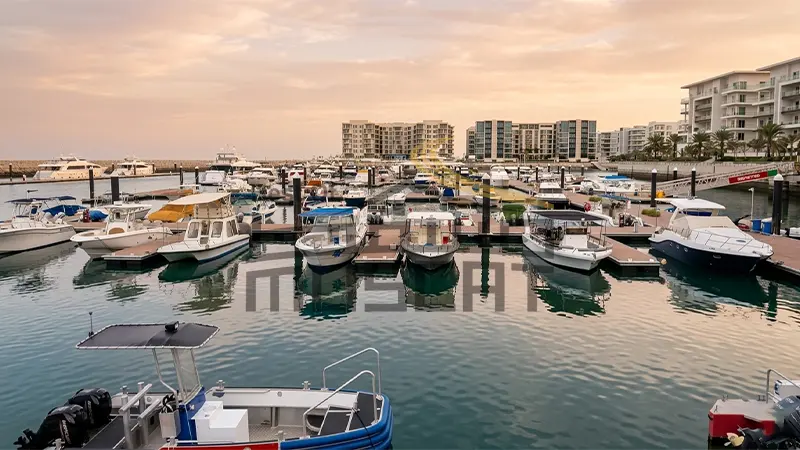
Al Mouj is the natural starting point for this drive, built around a working marina rather than open coastline. Parking is plentiful in marked lots along the promenade, and the walk from car to beach or waterfront café rarely takes more than a few minutes. The beach sits beside the marina channel, with calmer water than the open coastline thanks to the breakwater, and a row of cafés directly behind the sand, the easiest place on this Muscat beach road trip to grab breakfast before the drive south.
What you give up for that convenience is the natural feel: higher café prices, steady boat traffic in view, and on Fridays, parking that fills by mid-morning along with a louder waterfront. Starting here works well with an early breakfast stop, especially traveling with kids who want shade and food close by before a longer day on the road.
Leaving Al Mouj, the marina towers thin out and the road runs into a quieter residential stretch through Azaiba, where sea views become more occasional than continuous.
Al Mouj looks completely different after dark. If you’re planning to start your coastal drive early and circle back here for the evening, our guide to the best nightlife in Al Mouj covers where the marina comes alive once the sun goes down.
Before setting off, it’s worth knowing Al Mouj also has a solid lineup of fitness options, covered in our guide to the best gyms and fitness centers in Al Mouj, for anyone wanting a workout before hitting the coastal road.
Al Azaiba and Ghubrah Stretch
Drive from previous stop: ~8 minutes · approx 5km
This urban coastline between Al Mouj and Qurum is mostly drive-by scenery, not a stop you need to plan around. The road runs close enough to the water for consistent sea views without leaving the car, passing through a built-up residential stretch with occasional public beach access points. Parking is limited and informal, mostly roadside gaps rather than dedicated lots.
Where this stretch falls short is upkeep, sand is patchy and debris collects near drainage outlets after rain, since none of it is maintained for tourism. Treat it as a connecting scenic segment on the way to Qurum rather than a planned visit.
Past Ghubrah, the corniche widens again and Qurum Natural Park comes into view, marking the busiest and most walkable stretch of the whole route.
Travelers basing themselves along this stretch of coast rather than driving from further out can find a full breakdown of options in our guide to the best hotels in Al Ghubrah, a convenient midpoint for starting the drive south toward Qurum and Qantab.
Qurum Beach, Qurum
Drive from previous stop: ~10 minutes · approx 6km
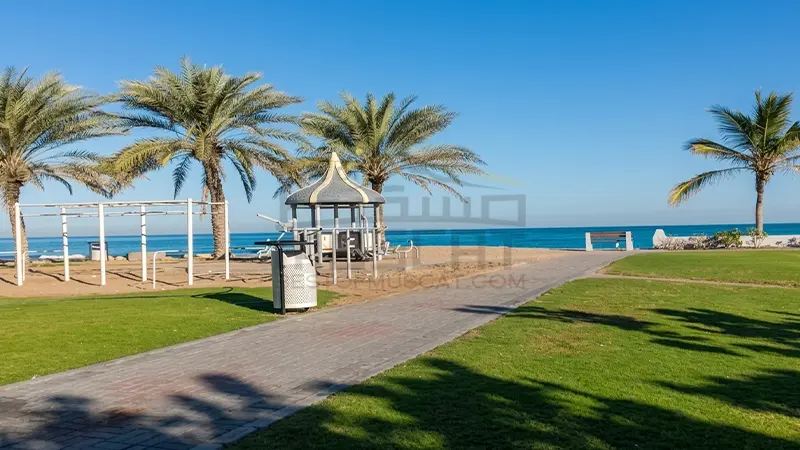
Qurum Beach is the most developed swimming-and-walking stop on the route, not a quiet escape. Parking along the beach road is straightforward most mornings, with marked bays near Qurum Natural Park and informal roadside space further along the corniche. The beach itself is wide, sandy, and backed by a paved walking and cycling track that locals use before 8am for exercise rather than swimming. Water here is calm but not particularly clear, since it sits close to harbor traffic lanes further along the coast.
By mid-morning on weekdays, and almost any time on Friday, the walking path fills with joggers, families, and food carts, fine for a second coffee stop, less so for quiet swimming. This is a good leg-stretch checkpoint before the road turns toward Qantab and the fishing coast begins.
South of Qurum, the road narrows and starts curving past Old Muscat’s headlands. Cafés give way to rock, and the coastline turns from urban beach to working harbor within a few kilometers.
If the morning walk along Qurum’s corniche works up an appetite, our roundup of the best ice cream in Qurum is a short detour from the beach road before you continue south toward Qantab.
Darsait Beach, Qurum
Drive from previous stop: ~8 minutes · approx 6km
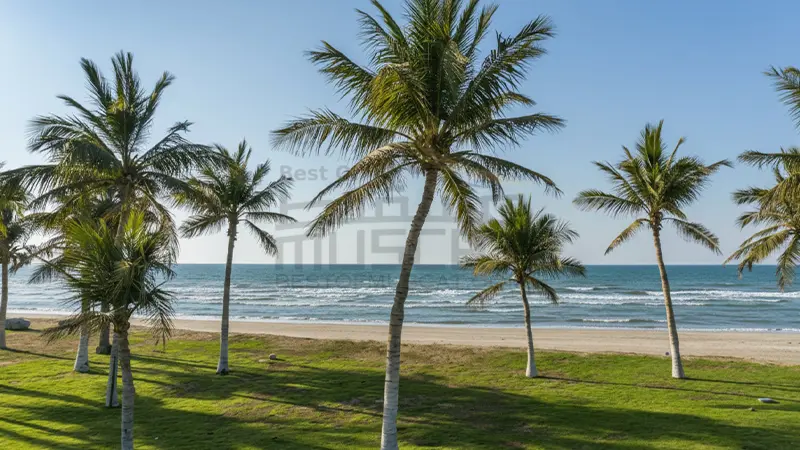
Darsait Beach is a sharp left turn from the typical tourist track. Tucked behind an older, established residential neighborhood, this beach is a narrow strip of dark sand framed by steep, jagged dark cliffs. It feels surprisingly isolated despite being minutes from the city center. You won’t find manicured walkways, green lawns, or trendy coffee shops here. Instead, imagine a quiet, raw cove where local fishermen launch small boats and neighborhood residents come for late afternoon walks.
The reality of Darsait is its unpolished nature. The water drops off relatively fast, and the shoreline often has rocks and tidal debris, meaning it isn’t the best choice for a lazy swimming day with kids. Come here for the dramatic cliff views, the crashing waves, and the quiet atmosphere before the road climbs into the mountains.
Leaving Darsait, the road bypasses the edge of the historic commercial ports and climbs deep into the rocky hills toward Qantab, where the coast transitions fully into a working fishing zone.
Qantab Coastline
Drive from previous stop: ~15 minutes · approx 11km
Qantab is a small fishing village wedged between two headlands, still functioning as a working harbor rather than a beach resort. The road narrows as it descends toward the water, with limited roadside parking near the harbor and a short walk down to the small beach beside the fishing boats. What you see here is working life, dhows pulled up on the sand, fishermen repairing nets, and a sheltered strip of water that stays calm even when the open coast outside is choppy. The contrast with Qurum, twenty minutes back up the road, is immediate.
Don’t expect more than that: there’s very little actual beach to spread out on, and almost no tourist infrastructure, so cafés and restrooms aren’t part of the deal. This is a photography and atmosphere stop, not a place to settle in for the afternoon.
From Qantab, the road climbs and cuts through a gap in the hills toward Bandar Jissah, where a roundabout marks the start of resort coastline and the entrance to the mountain pass that leads on to Yiti.
Qantab sits just past the headlands near Old Muscat and Muttrah. If you’d rather stay closer to that side of the city before continuing the drive, our guide to the best hotels near Muttrah lists options within easy reach of this stretch of the route.
Bandar Jissah Coves
Drive from previous stop: ~15 minutes · approx 10km
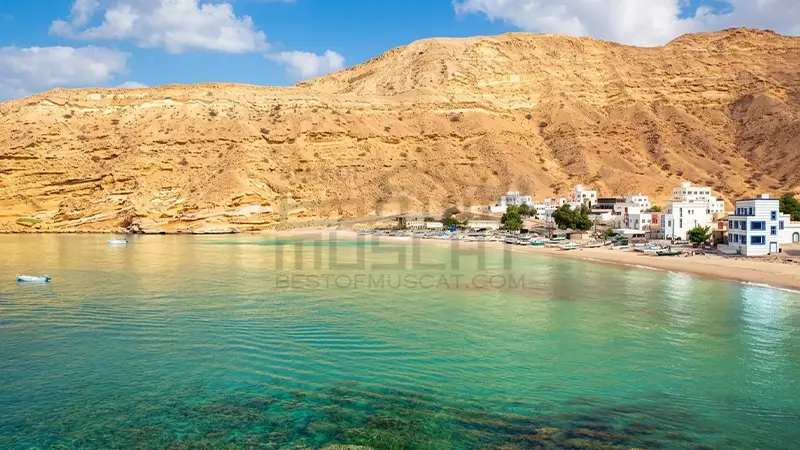
Bandar Jissah is where the coastline turns rocky and dramatic, anchored by the Shangri-La resort collection and a well-known sea arch carved into the headland. The road runs past the resort entrances before reaching public-access points to smaller coves tucked between rock outcrops. Parking near the public coves is limited and unmarked, so arriving before mid-morning matters more here than anywhere else on the route. Water in these coves is noticeably clearer than at Qurum or Al Mouj, good enough for casual snorkeling on calm days, and the sea arch is a genuine landmark worth the short walk.
Worth knowing before you go: several of the best coves need a short scramble over rock rather than a flat walk, which rules this stop out for anyone with mobility limits or small children who can’t manage uneven ground. Pair it with a drink at the resort promenade if a scramble-and-swim stop fits the day.
Continuing past the Bandar Jissah roundabout, the road cuts through a narrow pass in the mountains toward Yiti, a short, winding stretch that signals the route is leaving developed Muscat behind for good.
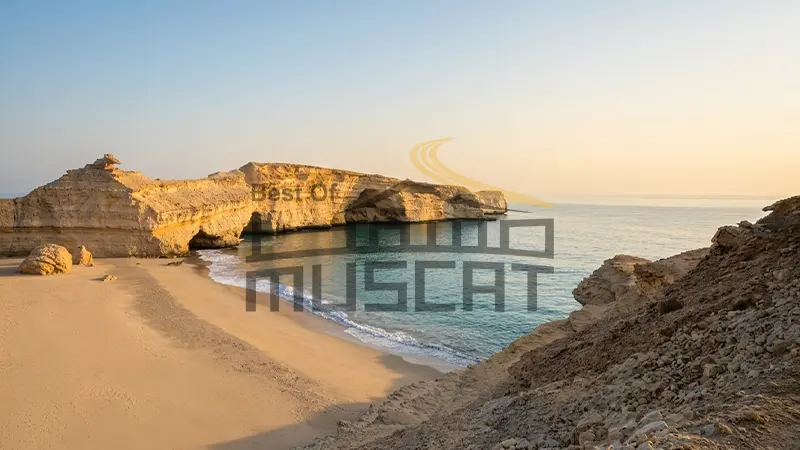
This is the point where the trip quietly changes character. Leaving Bandar Jissah, the last structured coastline fades behind you and the road starts to feel more exposed, with fewer buildings and longer gaps between signs of development. The sea stops feeling like something you pass by and starts feeling like something you are moving with, constantly appearing and disappearing between the mountain cuts. It is not a dramatic shift, but a gradual one you only fully notice once you realize the next stops no longer feel like extensions of the city, but part of a more open coastline system.
Yiti Beach
Drive from previous stop: ~10 minutes · approx 7km (through the mountain cut from Bandar Jissah)
Yiti sits past a mountain cut reached from the Bandar Jissah roundabout, and the drive in is as much a part of the experience as the beach itself. The pass opens onto a long stretch of beach that’s significantly less developed than anything closer to Al Mouj or Qurum. Parking is informal, mostly flat ground just off the road, and the beach extends far enough that crowds spread out even on a busy Friday. Water entry is generally easy, with a gradual slope rather than a sudden drop, making it one of the more swim-friendly stops on the route.
The trade-off is shade: outside a few natural rock formations, there’s little protection from direct sun, so a midday summer visit is genuinely uncomfortable, not just warm. This is the stop to extend if swimming and space matter more than scenery, and the last real beach before the road turns into open highway toward Quriyat.
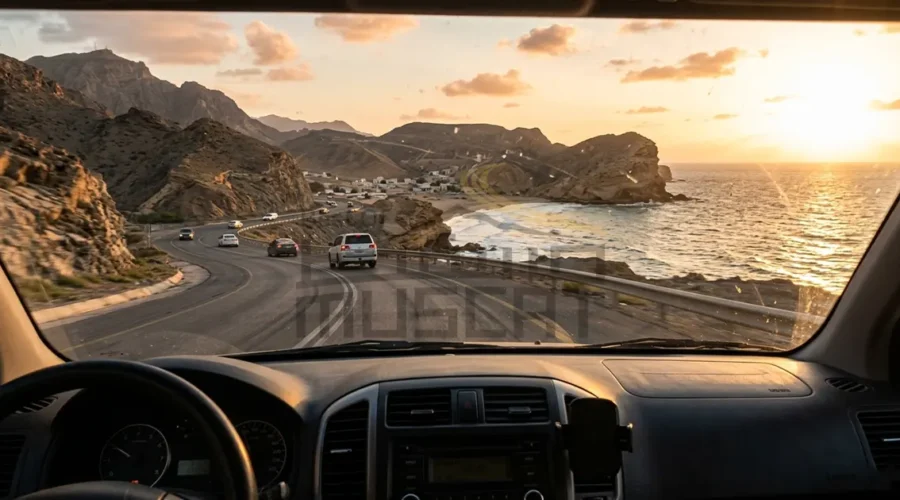
Beyond Yiti, the road rejoins the main coastal highway and straightens out for the final, longest leg, open highway with the Eastern Hajar foothills on one side and the sea intermittently visible on the other, all the way to Quriyat.
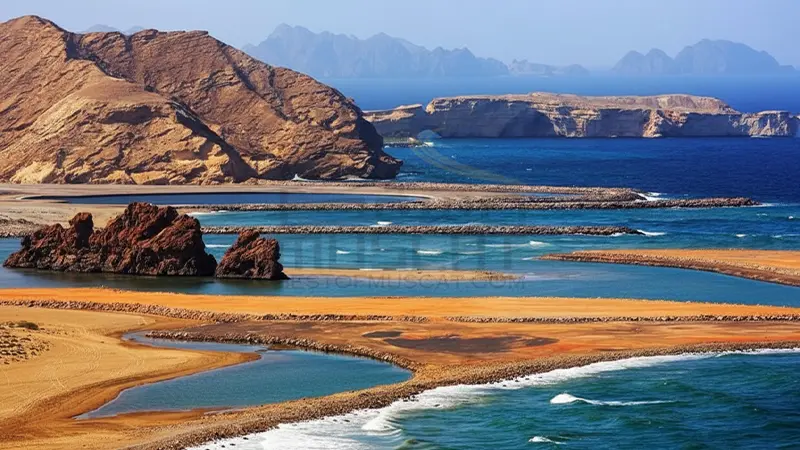
Qantab, Yiti, and Bandar Al Khairan aren’t just stops on this drive, they’re three of the best sunset spots in Muscat as well. If you’re timing the route around golden hour, this best Muscat sunset guide covers what each one looks like at that time of day and how to plan around them.
Quriyat Coastal Endpoint
Drive from previous stop: ~35 minutes · approx 38km
Quriyat marks the natural end of this route, a working fishing town roughly 120km from Al Mouj with its own fort, souk, and harbor. The drive in follows the coastal highway before the town center appears a short distance off the main road, fort visible as you approach. Parking near the souk and harbor is informal but rarely full, since Quriyat doesn’t draw the steady tourist traffic that closer stops do. What’s here is a working harbor with dhows, a modest fort open to visitors, and a low-key souk that hasn’t been built around day-trippers.
One thing to plan around: there’s no dedicated swimming beach at the town center, so anyone wanting a final swim should handle that at Bandar Jissah or Yiti instead. Treat Quriyat as the cultural and lunch close to the drive, not another beach stop.
This is where the coastal identity of the drive effectively ends. Beyond Quriyat, the road no longer feels like a sequence of beach stops but a transition into inland Oman. The change is subtle but noticeable, less coastline rhythm, more open highway and mountain edge, marking the real end of the Al Mouj to Quriyat corridor.
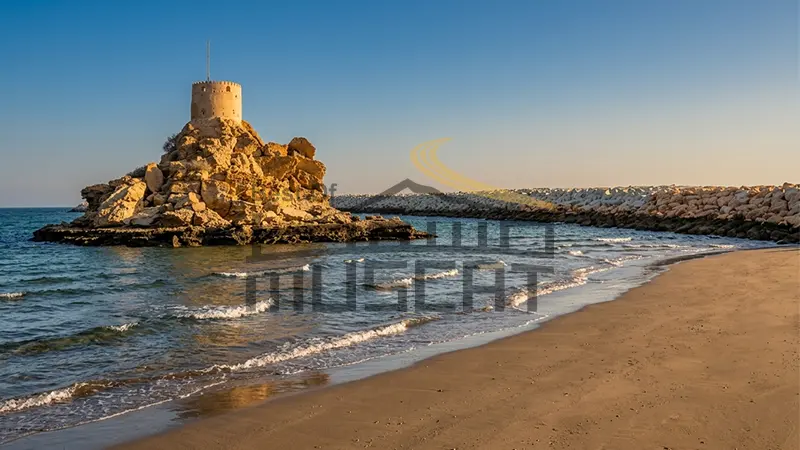
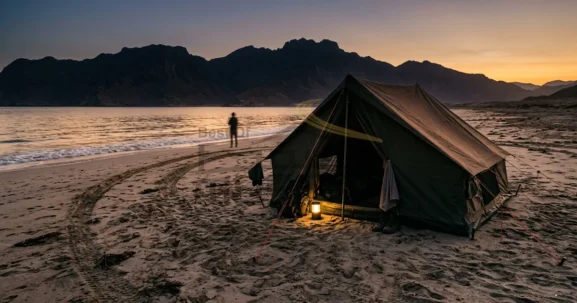
If the drive east leaves you wanting more than a day trip, Quriyat is the gateway to some of the best overnight stops in the area, including the wadis at Dayqah and Al Arbeieen. Our guide to wadi and beach camping along the Quriyat road explains access, flood risks and the best months to go.
Local Road Trip Insights
Leaving Al Mouj before 7am versus leaving after 9am changes the entire trip. The earlier departure gets you cool air through Al Mouj and Qantab and full daylight by the time you reach Yiti and Bandar Jissah, while a late-morning start means hitting the rockier stops during the harshest midday glare, when both photography and comfortable swimming get harder.
Friday mornings bring noticeably heavier traffic through Al Mouj and around the Bandar Jissah resort entrances, easing again past Qantab and Yiti since fewer day-trippers go that far. Weekday mornings, particularly Sunday through Tuesday, are the quietest window for the entire route.
Winter months, especially December through February, give the clearest visibility for both photography and snorkeling at Bandar Jissah, since summer humidity tends to haze the horizon line by mid-morning. Summer trips are still workable if you depart at sunrise and plan to be done by 10am, before the heat makes the rockier stops uncomfortable.
During Ramadan, plan around prayer and iftar timing rather than around traffic. Most cafés at Al Mouj close in the late afternoon ahead of iftar and reopen afterward, so a Ramadan-timed trip works best as either an early morning drive finishing before noon, or a late afternoon drive that ends at Al Mouj for iftar.
Which Coastal Stop Matches Your Road Trip Style
If photography is the priority, the strongest combination is Qantab for the working harbor shots and Bandar Jissah for the sea arch and rock coves, both reachable within a single morning.
If swimming is the actual goal, Yiti offers the easiest water entry and the most space, while Bandar Jissah rewards anyone willing to scramble over rock for clearer water.
If you’re traveling with young children or anyone with limited mobility, Al Mouj and Yiti are the two stops built for easy, flat access. Qantab and Bandar Jissah both involve uneven ground that isn’t stroller or wheelchair friendly.
If you want to complete the full route in one day, budget at least four hours including stops, and treat Quriyat as the finish line with lunch rather than another swimming break.
What To Skip If You Have Limited Time
2-3 hour version: Al Mouj + Qurum only. Turn back after Qurum and skip everything south of it, you’ll get the marina and city beach contrast without committing to the full Al Mouj to Quriyat drive.
4-5 hour version: Al Mouj + Qurum + Darsait + Qantab + Bandar Jissah. Turn back at the Bandar Jissah roundabout and skip Yiti and Quriyat. This covers the developed-to-fishing-village progression without the longest final highway leg.
Full day version (6+ hours): The complete route through Quriyat, including time at the Bandar Jissah coves and Yiti’s open beach, with a lunch stop either at Al Mouj at the start or in Quriyat at the end. This is the only version that delivers the full marina-to-raw-endpoint arc.
Frequently Asked Questions (FAQ)
Is the Muscat coastal road trip worth it in one day?
Yes. The full Al Mouj to Quriyat route fits into a single day if you leave by 7am. Total time including stops is around 4 to 6 hours depending on how long you stay at each location.
How long does the Al Mouj to Quriyat drive take with stops?
Driving time is about 1 hour 40 minutes to 2 hours. With stops at beaches and viewpoints, expect a total trip duration of 4 to 6 hours.
How far is Quriyat from Al Mouj?
Quriyat is roughly 120 kilometers from Al Mouj depending on the exact route taken along the coastal highway.
Al Mouj or Qantab, which is the better experience?
Al Mouj is better for cafés, shade, and easy access. Qantab is better for photography and a traditional fishing village atmosphere with minimal infrastructure.
Yiti or Bandar Jissah, which is better for swimming?
Yiti is easier for swimming due to flat access and open space. Bandar Jissah offers clearer water and more dramatic coves but requires walking over rocky terrain.
Is there an entry fee or parking cost along this route?
No public beaches along this route require entry fees. Some resort areas near Bandar Jissah may have restricted parking rules, so signage should be checked on arrival.
Is this route better in summer or winter?
Winter (November to March) is better due to cooler temperatures and clearer visibility. Summer trips require early morning departure to avoid heat.
Do I need an SUV for this drive?
No. A standard sedan is sufficient for the entire route. SUV is only helpful for rough parking areas near Bandar Jissah and Yiti.
Is Quriyat just a fishing town, or is there anything to actually see?
Quriyat is a working fishing town with a harbor, fort, and small souk. It feels less like a beach destination and more like the cultural endpoint of the coastal route.
What’s the best time of day to start this drive from Qurum?
Between 6:30 and 7:30am. This gives cooler weather, calmer beaches, and enough daylight to complete the full route comfortably.
Is Darsait Beach good for swimming?
It is okay for a quick dip, but not ideal for a long swimming day. The shoreline is rockier than Qurum, the sand is coarser, and the water depth drops off much quicker. It is better suited for a scenic view and a quiet walk.
Can you access Darsait Beach with a sedan car?
Yes. The road leading through the Darsait neighborhood directly down to the beach area is completely paved and easily accessible for standard low-clearance vehicles.