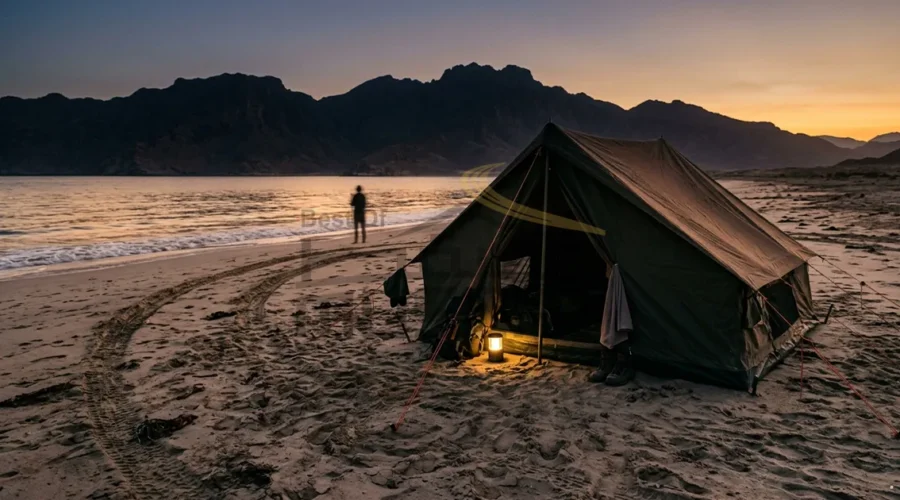
Top 10 Camping Spots Near Muscat (Beach, Wadi & Desert): From Easy 2WD Beaches to 4×4 Escapes
Quick Answer
Top picks: Sifah and Fins beaches, Wadi Dayqah and Al Arbeieen wadis, Wahiba Sands dunes. Sifah suits 2WD; Jebel Akhdar, Salmah and Bani Awf need a 4×4.
Intro
Camping near Muscat runs on a simple rhythm. Residents head out on Friday afternoon, pitch a tent, and drive back Saturday, and the season builds from October as the heat finally breaks. Families tend to pick beaches close to the city, while friends and experienced off-roaders go further for wadis, plateaus and dunes.
This guide covers eight spots within roughly three hours of the capital, with honest drive times, vehicle needs, and the catch at each one. Muscat Governorate has its own camping rules, so the legal basics are covered below before you load the car.
How to Choose Between These Spots
Vehicle type. Sifah has a paved approach and suits a regular car. Fins is usually reachable without a 4×4, though some dirt tracks are easier with one. Jebel Shams can be driven in a saloon with care, but a 4×4 is recommended. Al Arbeieen, Salmah Plateau and the deep dunes of Wahiba Sands call for proper off-road capability.
Distance and drive time. Sifah is the closest at roughly 45 minutes to an hour. Fins and the wadis around Quriyat sit at roughly 1.5 to 2 hours. Wahiba Sands takes about 2 to 3 hours, depending on your entry point. Salmah Plateau and Jebel Shams are the long ones at around 3 hours.
Season and temperature. The comfortable window runs roughly October to April. Summer is hot and humid on the coast, and desert reports advise avoiding June and July. Wadis add a second seasonal factor, because the cooler months are also when rain and flash floods are most likely.
Crowds. Beaches near Muscat get busy on weekends and holidays. Wahiba’s camps are quieter if you avoid Fridays and Saturdays.
Facilities. Assume none. Plan to be self-sufficient everywhere except where a village, resort or desert camp sits nearby.
Family-friendliness vs adventure. Sifah and the Wahiba gateway camps are the gentlest options. Salmah, deep Wahiba and Al Arbeieen reward experience and preparation.
Quick Comparison Table
| Spot | Type | Approx. drive from Muscat | Vehicle needed | Best season |
|---|---|---|---|---|
| Sifah Beach | Beach | 45 to 60 min | 2WD | Oct to Apr |
| Bandar Al Khairan | Beach | About 1 hr | 2WD to park and walk; 4×4 low range to reach the shore | Cooler months |
| Fins Beach | Beach | 1.5 to 2 hrs | 2WD possible; 4×4 helps on some tracks | Oct to Apr |
| Wadi Dayqah (valley below the dam) | Wadi | About 1.5 hrs | Varies; track crosses a stream bed | Cooler months, dry forecast only |
| Wadi Al Arbeieen | Wadi | About 1.5 hrs to the turnoff, then a graded track | 4×4 recommended | Oct to Apr, dry forecast only |
| Wadi Bani Awf | Wadi / mountain | About 1.5 to 2 hrs to the turn-off, then a 40 km track | 4×4 with low range | Oct to Apr, dry forecast only |
| Salmah Plateau | Mountain | About 3 hrs | 4×4 with low range | Cooler months |
| Jebel Akhdar | Mountain | About 2 to 2.5 hrs | 4×4 only (police checkpoint) | Cooler months; nights get cold |
| Jebel Shams | Mountain | About 3 to 3.25 hrs | 2WD possible with care; 4×4 recommended | Oct to Apr |
| Wahiba Sands | Desert | 2 to 3 hrs to the gate | 2WD to the gate; 4×4 for the sand | Cooler months; avoid Jun to Jul |
Sifah Beach
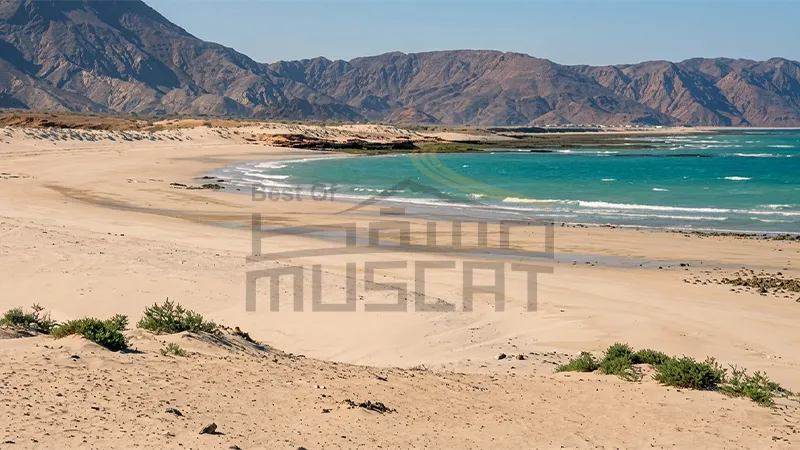
A long, pale stretch of sand at the foot of the Hajar Mountains, close enough to Muscat that you can leave after work and still see sunset from your tent.
Sifah sits on the coast southeast of Muscat, beside the Jebel Sifah development, roughly 45 minutes to an hour from the city. The coastal road is well maintained and the campsite areas are reachable in a regular car. A village is close by, and a few glamping operators work nearby, so basic supplies are not far. For a wider look at the shoreline, see our guide to the best beaches in Muscat.
Camping here is a cooler-months habit, typically October to April, with winter weekends the busiest. Sifah is in Muscat Governorate, so the municipality’s rules apply. Stay at least 10 metres from the water and at least 100 metres from residential areas, and read the legal section below before you pitch.
The trade-off: weekends are loud and crowded, and litter from beach barbecues is a recurring complaint. Go midweek if you want quiet.
Best for: first-time campers who want an easy beach night.
Bandar Al Khairan
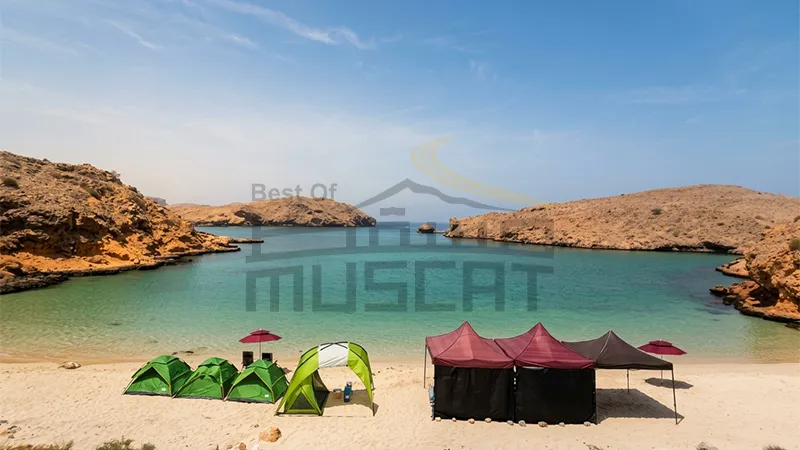
A string of turquoise coves under orange sandstone cliffs, close enough to Muscat that you can be pitched before sunset.
Bandar Al Khairan sits on the coast southeast of Muscat, about an hour’s drive from the city. The rocky beach curves around a secluded inlet, calm enough to swim at high tide, and at low tide you can wade through the channel to the neighbouring beach. Reports on access differ. Some say a regular car can park at the top and you walk down, while others use a 4×4 in low range to reach the shore. Nothing is provided on site, so bring everything. The cliffs glow at sunset, which is why it features in our guide to the best sunset spots in Muscat.
This is a designated environmental tourism zone managed by the Ministry of Heritage and Tourism. In February 2025, Muscat Municipality dismantled illegal tourist camps here and at Yiti, and urged people to use authorised sites. Check the municipality’s current camping map and permit portal before you go. Do not pitch low on the beach, because the tide rises.
The trade-off: rules in this zone are tightening, and weekends are busy. If the current rules are unclear, choose Sifah instead.
Best for: a short sea-and-sunset night for campers who have checked the current rules.
Fins Beach
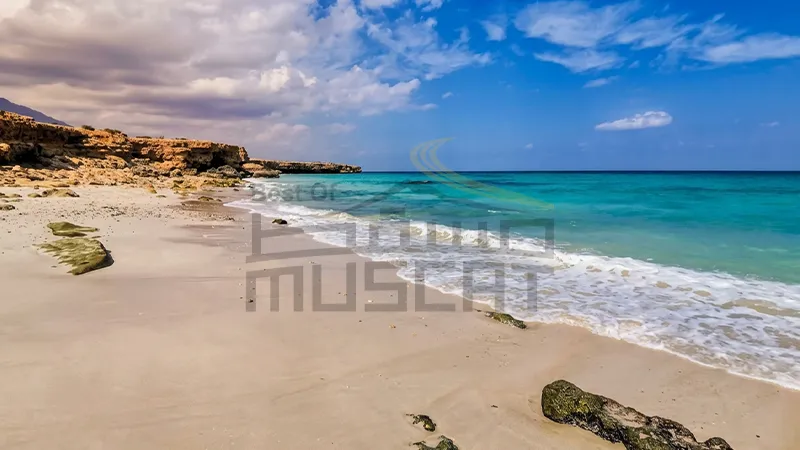
A raw, white-pebble cove between cliffs and open water, where the whole coastline feels like it belongs to whoever arrives first.
Fins sits near the village of the same name, roughly halfway between Quriyat and Sur, directly off the coastal highway. Expect about 1.5 to 2 hours from Muscat. You turn off onto dirt tracks that run toward the water. A 4×4 is not mandatory, but some tracks are easier with one. Fins is outside Muscat Governorate, in the Al Sharqiyah region.
It works well as a base for a wider coastal trip. Wadi Shab is a short drive away, and the road up toward Majlis Al Jinn starts nearby. Pebbles replace sand here, so a good ground mat matters more than usual. Swimming needs care because of the rocks.
The trade-off: it fills up on public holidays, with rows of campers lining the beach, and there are no facilities. Daytime shade is also scarce.
Best for: a classic Oman beach night paired with a wadi day.
Wadi Dayqah (Valley Below the Dam)
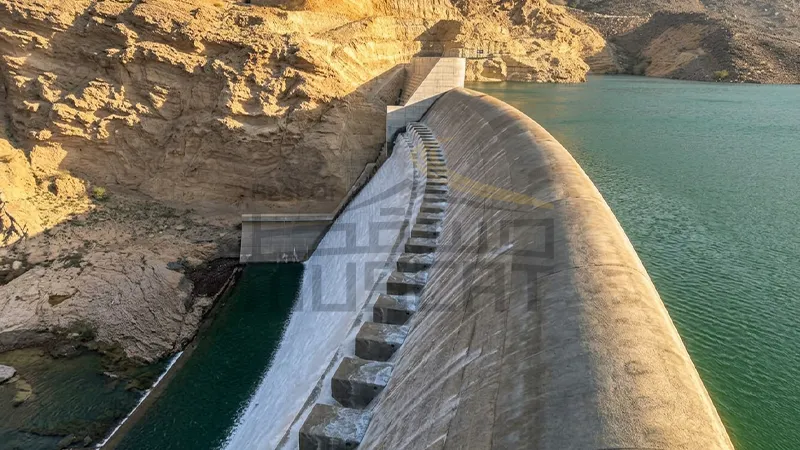
A narrow, cliff-sided valley where a turquoise stream winds toward Quriyat, with shade you will not find on the coast.
Wadi Dayqah sits about 1.5 hours from Muscat, near Quriyat, below Oman’s largest reservoir. Campers favour the valley floor below the dam, where pools hold fish and the cliffs give relief from midday sun. The track in follows a stream bed, so vehicle suitability depends on recent weather. Check conditions locally before committing a low car.
The dam park itself is a managed visitor area. Reports about camping inside it conflict, so camp in the valley only after checking signage and current rules. Pair the stop with Wadi Al Arbeieen and the coastal Quriyat road trip.
The trade-off: this is a flood-prone wadi. Rain falling many kilometres upstream can send water down a clear valley. Pitch on high ground and skip the trip entirely if rain is forecast.
Best for: shaded, scenic camping on a dry-weather weekend
Wadi Al Arbeieen
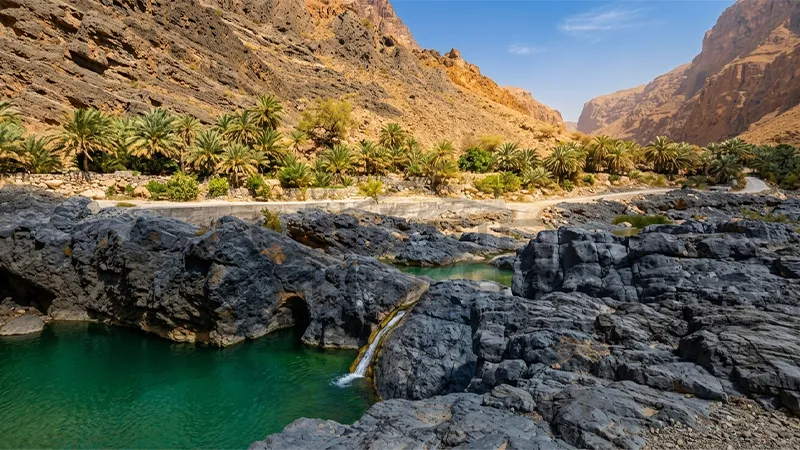
A hidden mountain wadi of green-blue pools, palm clusters and boulders, reached by a graded track that keeps the crowds thin.
Al Arbeieen is about 1.5 hours from Muscat to the highway turnoff, followed by a graded gravel track with steep sections and water crossings. A 4×4 is strongly recommended. Reports vary, and some people have reached the lower campsites in regular cars, but others turn back. Navigation apps may route you up the wadi from below, so reviewers advise approaching from the highway exit instead.
Wild camping here is popular, with flat areas near the water. Facilities are limited, so bring your own food, water and a plan for waste.
The trade-off: the track, the water crossings and the flood risk. This is a wadi bed, and the rule is the same as everywhere: no rain forecast, no trip.
Best for: confident 4×4 drivers who want a swim and a quiet night.
Wadi Bani Awf
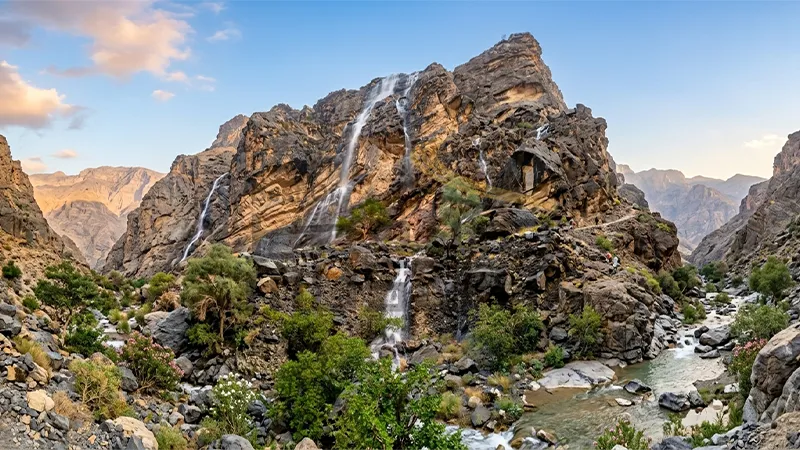
A mountain wadi route that climbs from the lowlands into the Hajar high country, with camp spots beneath rock walls and above traditional villages.
Wadi Bani Awf is roughly 1.5 hours from Muscat to the turn-off. From there, a track of about 40 km runs through the wadi, so allow 3 to 4 hours including stops. A 4×4 with low range is essential. The track is steep and narrow, with wadi crossings. Campers use the area near the northern entrance by the Little Snake Canyon, and the setting is widely called one of the most dramatic camping areas in the Hajar.
There are no facilities, so bring everything. Snake Canyon is a canyoning route where first-timers are advised to go with a guide. The nearby village of Bilad Sayt makes a good stop. Conditions change with rain, so check the forecast.
The trade-off: a steep, rough track and flood exposure. It is not a place for low-range beginners or wet weather.
Best for: experienced 4×4 drivers who want mountain-track camping.
Salmah Plateau
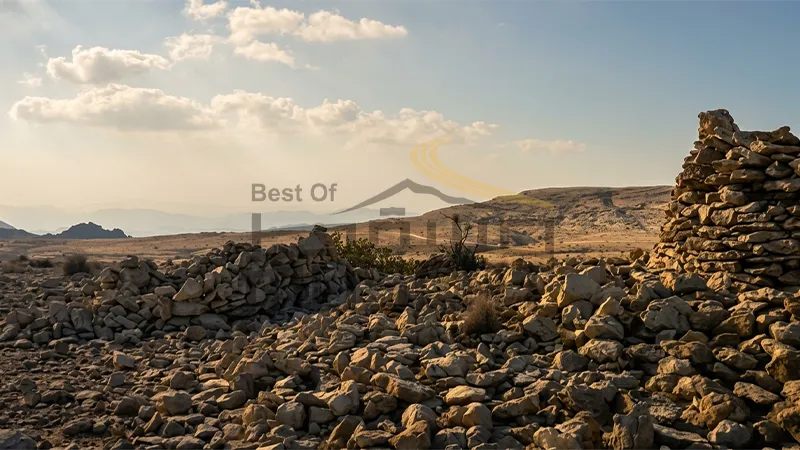
A high, semi-arid mountaintop above Fins, where wide views over the coast and a scatter of old villages make the climb worth it.
You reach the plateau by turning off the coastal road behind Fins village and climbing the track. This needs a proper 4×4 with low range. Reports describe a steep, degraded final section that can defeat a light SUV. Allow roughly three hours from Muscat including the climb.
Camping spots face the sea or sit off-track near the beehive tombs of Al Jaylah. Majlis Al Jinn cave is nearby. Cloud can settle over the plateau, so pick your pitch before dark.
The trade-off: the ascent itself. Poor traction, steep gradients and low cloud make this a no-go for inexperienced drivers.
Best for: experienced 4×4 drivers chasing a sunset above the coast.
Jebel Akhdar
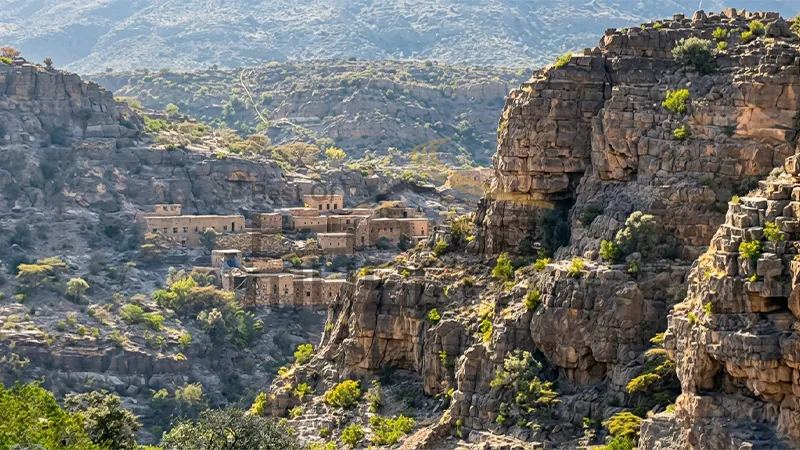
The Green Mountain: a cool, high plateau where nights turn cold, reached by a paved road that only 4x4s are allowed to climb.
From Muscat it is about 155 km to the checkpoint gate, roughly 1.5 hours. The climb to the plateau adds about 45 minutes of steep road, so allow 2 to 2.5 hours in total. The police checkpoint admits only 4×4 vehicles, so have your licence, insurance and IDs ready. The road is fully paved but steep, so check your brakes.
Wild camping is allowed, and campers use a large leisure area set back from the main road with canyon views. There is no decent shop up top, so bring food. Nights are cold. Campers have reported ice on sleeping bags in the cooler months. The altitude keeps it cooler than Muscat, but pack warm layers either way.
The trade-off: the 4×4-only checkpoint and the cold.
Best for: a cool-air mountain escape in a 4×4.
Jebel Shams
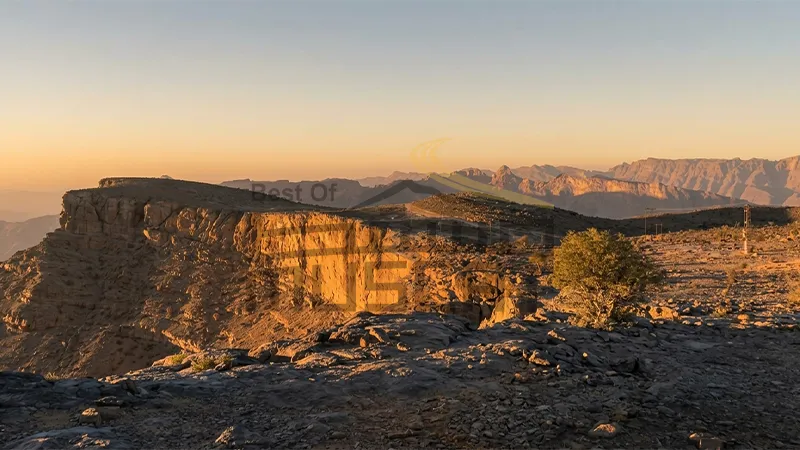
Oman’s highest peak, with canyon-rim views and cold, thin-aired nights that feel nothing like the coast.
Jebel Shams is roughly 240 km from Muscat, about 3 to 3.25 hours by road. The route is paved most of the way, with a graded unpaved stretch near the top of about 7 to 8 km. Drivers report making it in a saloon with patience, but a 4×4 is recommended, especially past the main resort where the road gets rougher.
Camp on the plateau or stay in nearby resorts and camp areas. Nights are cold and windy, and there is little natural shade, so bring three-season gear and a proper windbreak. Pair it with our Muscat hills guide if you want a shorter mountain day first.
The trade-off: distance and cold. It is the furthest spot here, and winter nights can surprise people who packed for the coast.
Best for: a cool-weather mountain night with canyon views.
Wahiba Sands
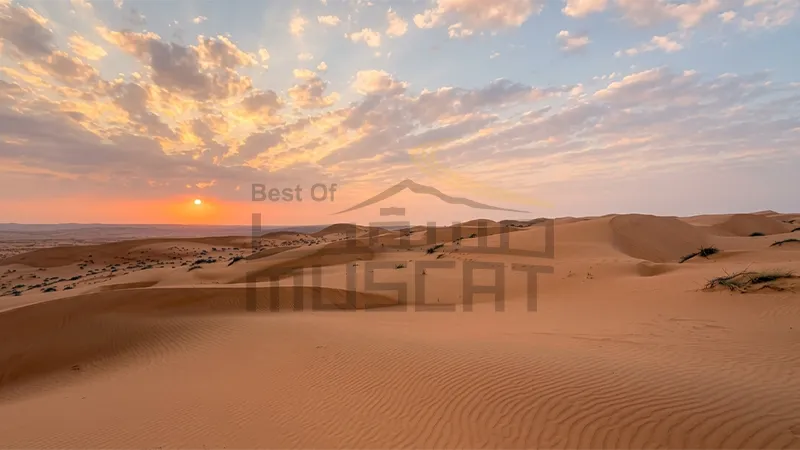
Golden dunes you can sample through a camp or take on yourself.
Wahiba Sands (also called Sharqiya Sands) is about 2 to 3 hours from Muscat to the entry points at Bidiyah, Al Wasil and Al Kamil. Deeper camps can take longer. The road is paved all the way, and a regular car is fine to those entry points. Beyond them is soft sand that needs a 4×4. Several desert camps operate and arrange transfers from a meeting point, so you can sleep in the dunes without driving on sand. Camp pricing varies.
Wild camping is possible further in, but only with a 4×4 with high and low range. Lower your tyre pressure, travel with a second vehicle, and carry sand plates and a shovel. Dunes shift, mobile signal is patchy, and you should secure your tent with rocks or heavy gear. Camps are quieter on weekdays, since Fridays and Saturdays get busy.
The trade-off: sand driving carries real recovery risk, and June and July are too hot.
Best for: a first night in the dunes.
Safety & Rules
Know the Muscat rules first. According to Muscat Municipality, camping or sitting in a tent or caravan for more than 48 hours in Muscat Governorate requires a prior permit and a RO 100 security deposit valid for seven nights. Sites must be in places specified by the municipality, at least 10 metres from the beach, away from fishermen and security-restricted areas, and at least 100 metres from residential neighbourhoods. Camping without a permit carries a RO 200 fine, and breaking other rules carries RO 50. Sifah, Wadi Dayqah and Wadi Al Arbeieen sit in Muscat Governorate. Rules can change, so check current guidance before you go.
Wadi flash floods. Oman’s Civil Defence and Ambulance Authority repeatedly warns against crossing flooded wadis, and rains in March 2026 caused several deaths. Authorities have also warned that deliberately crossing a flooded wadi can bring a prison term and a fine. Check the forecast, never camp in a wadi bed, and leave if rain starts upstream. Emergency number: 9999.
If rain is forecast, swap the trip for one of the best indoor activities in Muscat.
Heat and hydration. Carry more water than you expect to need, and plan shade for daytime. Desert reports advise avoiding June and July.
Sand and rough tracks. Lower tyre pressure on soft sand, travel in company, carry recovery gear, and do not attempt deep dunes without experience.
Leave no trace. Take every bag of rubbish with you. Municipality rules ask campers not to modify the site, burn waste, or damage plants, and press reports of municipality guidance have restricted fires and barbecues on beaches and in green areas. Check before lighting anything. Do not direct lights or lasers at the sky.
Plan and tell someone. Share your route and return time, carry offline maps and keep emergency numbers saved. Signal is unreliable in the wadis, plateaus and dunes.
Jebel Akhdar: only 4x4s pass the police checkpoint. Carry your licence, insurance and IDs
Bandar Al Khairan is a managed environmental zone, so confirm current camping areas first.
What to Bring
- Water, plus extra for cooking and washing
- Tent, ground mat and stakes that suit sand or pebbles
- Shade for the day, since many spots have none
- A warm layer for nights, especially in the mountains
- Power bank and offline maps
- Torch or headlamp
- Rubbish bags to carry everything out
- First-aid kit
- Cooking gear and food, with no reliance on shops nearby
- Recovery gear for sand: shovel and traction plates
Local Insight Layer
Best months. October to April is the usual window, and December to March is often called the sweet spot. Daytime temperatures stay below the extremes, and nights range from cool to cold at altitude.
Months to avoid. Summer is hot and humid on the coast, and desert reports advise skipping June and July.
Weekend patterns. Oman’s weekend is Friday and Saturday, and Muscat residents head out accordingly. Sifah gets busy on weekends, Fins fills up on public holidays, and Wahiba’s camps are quieter midweek. Long breaks such as the National Day holiday push demand up.
Heat and timing. Arrive in daylight to find a good pitch, especially on tracks like Salmah. Leave dunes before the afternoon heat in warmer months.
Ramadan. The key point is that eating, drinking or smoking in public during daylight hours is not allowed for anyone. In a private, remote setting such as a campsite you are away from public view, but be discreet near villages and roads. An evening arrival at a Wahiba camp works well. Ramadan dates shift each year, so check the calendar.
Beach vs wadi vs desert. Beaches are fine through the cooler months. Wadis are best in dry spells because the same months can bring flash floods. Deserts are best in the coolest part of the season. Mountains are cooler than Muscat. Jebel Akhdar and Jebel Shams get cold at night in winter.
Which Spot Fits You? (The Pitch Picker)
- First-timer: Sifah or Wahiba camps.
- 2WD driver: Sifah, Fins, Jebel Shams with care, or Wahiba’s gate.
- Experienced 4×4: Salmah, Al Arbeieen, Bani Awf or Jebel Akhdar.
- Short trip: Sifah, Bandar Al Khairan or Wadi Dayqah.
- Overnight adventure: Fins with a Wadi Shab day, or Salmah Plateau.
- Family: Sifah on a weekday, or Wahiba camps.
- Low effort: Sifah.
- Remote: Wahiba’s deep dunes, Salmah or Bani Awf.
Frequently Asked Questions (FAQ)
Where is the best place to camp near Muscat for beginners?
Sifah Beach is the easiest, at around 45 minutes to an hour on a paved road. The Wahiba gateway camps are the easiest dune option because camps handle the sand driving.
Is camping legal near Muscat?
In Muscat Governorate, camping beyond 48 hours needs a permit, and sites must be in municipality-specified areas. Outside the governorate, wild camping is widely practised, though nature reserves and private land are restricted. Check current local rules before you go.
Do I need a 4×4 to camp near Muscat?
Not always. Sifah is reachable in a regular car, Fins is usually reachable in one, and Jebel Shams is driveable with care. Jebel Akhdar admits only 4x4s at a police checkpoint. Al Arbeieen, Bani Awf, Salmah Plateau and the deep dunes of Wahiba call for a 4×4.
How much does camping near Muscat cost?
Wild camping is typically free, and desert camp pricing varies. The permit deposit for Muscat Governorate stays are set by the municipality, so check current figures.
What is the best time to camp near Muscat?
October to April, with December to March the most comfortable. Avoid June and July in the desert.
Is it safe to camp in a wadi?
Only in dry, settled weather, on high ground. Flash floods can arrive from rain far upstream, and several people died in wadi incidents in March 2026. If rain is forecast, choose a different spot.
Fins Beach or Sifah Beach?
Sifah is closer and easier to reach. Fins is wilder, further away, and sits next to wadi and mountain options. Sifah is better for a quick trip, while Fins suits a two-day coastal route.
Wadi Dayqah or Wadi Al Arbeieen?
Dayqah is shadier and closer, with an easier approach in dry weather. Al Arbeieen needs a 4×4 but feels more remote.
Wahiba camps or wild camping in the dunes?
Camps are the gentler option with built-in transfers. Wild camping needs a 4×4, sand-driving experience and a second vehicle.
Can I camp at Bandar Al Khairan?
It is a designated environmental tourism zone, and authorities removed illegal camps there in 2025. Check Muscat Municipality’s current camping map before you go, and consider Sifah if rules are unclear.
From our Instagram
See more spots and photos on our Instagram
Follow along to see the new places we check out
Follow @bestofmuscat →