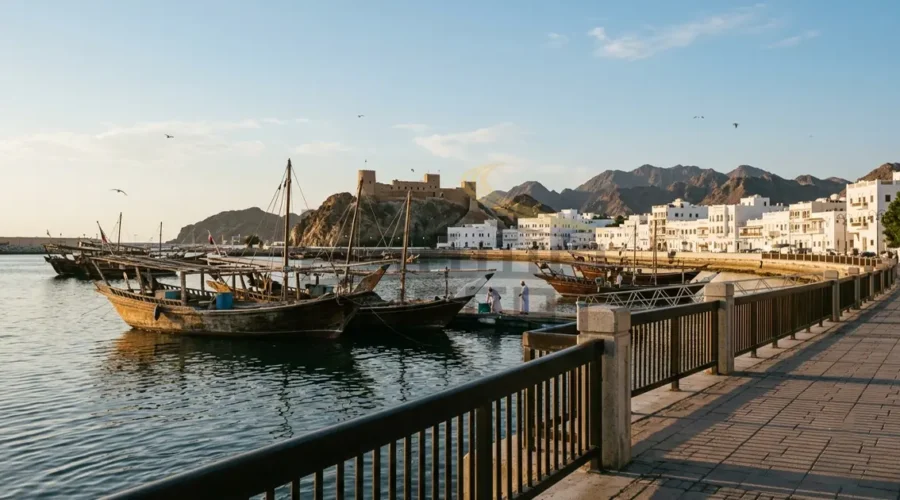
Best Things to Do in Muttrah, Muscat: A Practical Guide to Oman’s Historic Port
Quick Answer
Muttrah is best known for its working harbour, its 19th-century souq, and the Corniche that runs between them, with a hilltop fort, an incense burner monument, and a striking modern fish market rounding out the district. A first visit typically combines the souq, the Corniche walk, and one viewpoint or museum, with most of it doable in half a day.
Introduction
Muttrah is the part of Muscat that still looks and feels like a working port, not a preserved replica of one. Fishing boats unload at dawn, shopkeepers roll up the shutters of the souq by mid-morning, and by evening the Corniche fills with families walking off the day’s heat against a backdrop of whitewashed buildings and bare mountains. It sits wedged between the sea and the Hajar Mountains, which is exactly what made it valuable as a harbour for centuries and what still gives it its shape today: a tight grid of lanes and merchant houses squeezed against the water.
What makes Muttrah worth planning around, rather than just passing through, is the mix of experience types packed into a small area. You can shop in one of the oldest markets in the Arabian Peninsula, watch the fish market in full swing, climb to a fort for harbour views, and sit down for a seafood dinner by the water, all within walking distance of each other. The rest of this guide breaks down which of those experiences suit which kind of visit.
How to Choose Your Muttrah Experience
Not every visitor needs to do everything on this list. Use these factors to decide where to spend your time.
- Time available. An hour or two is enough for the Souq and a stretch of the Corniche. Half a day lets you add the fish market, a museum, and a viewpoint.
- Walking involved. Most of Muttrah is flat and walkable, but reaching Muttrah Fort or the Riyam Incense Burner Monument involves stairs or an uphill path.
- Heat and season. Outdoor walking is far more comfortable from October through April. Midday sun between May and September makes indoor stops and early morning or evening timing much more important.
- Historical interest. The Fort, Bait Al Baranda Museum, and the old merchant quarter reward visitors who want context, not just photos.
- Photography and views. The Fort and the Incense Burner Monument are the two clear standouts for wide harbour and skyline shots.
- Families with children. Al Riyam Park has shaded green space and a small amusement area, which makes it more forgiving for kids than the souq’s narrow lanes.
- Indoor vs outdoor. Bait Al Baranda and the covered sections of the souq offer relief from the sun; the Corniche, fish market, and Fort are fully outdoor.
- Time of day. Morning suits the fish market and souq before the midday closure; late afternoon into evening suits the Corniche, Fort, and dhow cruises.
Muttrah Souq
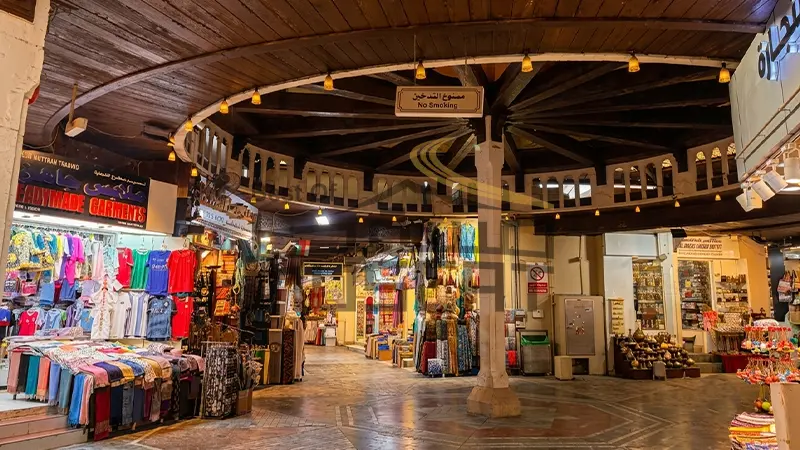
Muttrah Souq is where to go for the most traditional shopping experience in Muscat, with narrow covered lanes, old-style storefronts, and the working atmosphere of a real market rather than a curated tourist bazaar.
Sometimes referred to locally as Al Dhalam Souq, a nod to its dim, covered alleyways, the market has functioned as a trading hub for goods moving through Muttrah’s harbour for generations. Walking through it today, the lanes are lined with stalls selling frankincense, spices, textiles, silver jewelry, khanjars, and pashminas, and the smell of incense tends to reach you before the entrance does. It’s less about any single must-buy item and more about the pace of it: vendors who expect you to browse, chat, and bargain rather than move through quickly.
The souq works well as either the start or the end of a Muttrah visit, since it sits right along the Corniche and close to the harbour. Bargaining is a normal part of shopping here, and most shops keep a split schedule, open in the morning, closed over the hottest part of the day, and open again into the evening.
The trade-off is that the lanes can feel cramped and warm during busy afternoon hours, and the maze-like layout means it’s easy to lose your bearings on a first visit.
The souq’s gold section deserves its own visit if jewellery interests you at all. Muttrah Gold Souq has been trading for over two centuries inside the covered lanes locals call Souq Al Dhalam, and our dedicated guide to gold and jewellery shopping in Muscat covers what to expect there, from traditional Omani bridal sets to the international showrooms tucked inside the same alleys.
Best for: first-time visitors and souvenir shopping.
- Opening Hours: Saturday – Thursday, 09:00 – 23:00 | Friday, 16:00 – 22:00
- Phone Number: +968-98277478
Muttrah Corniche
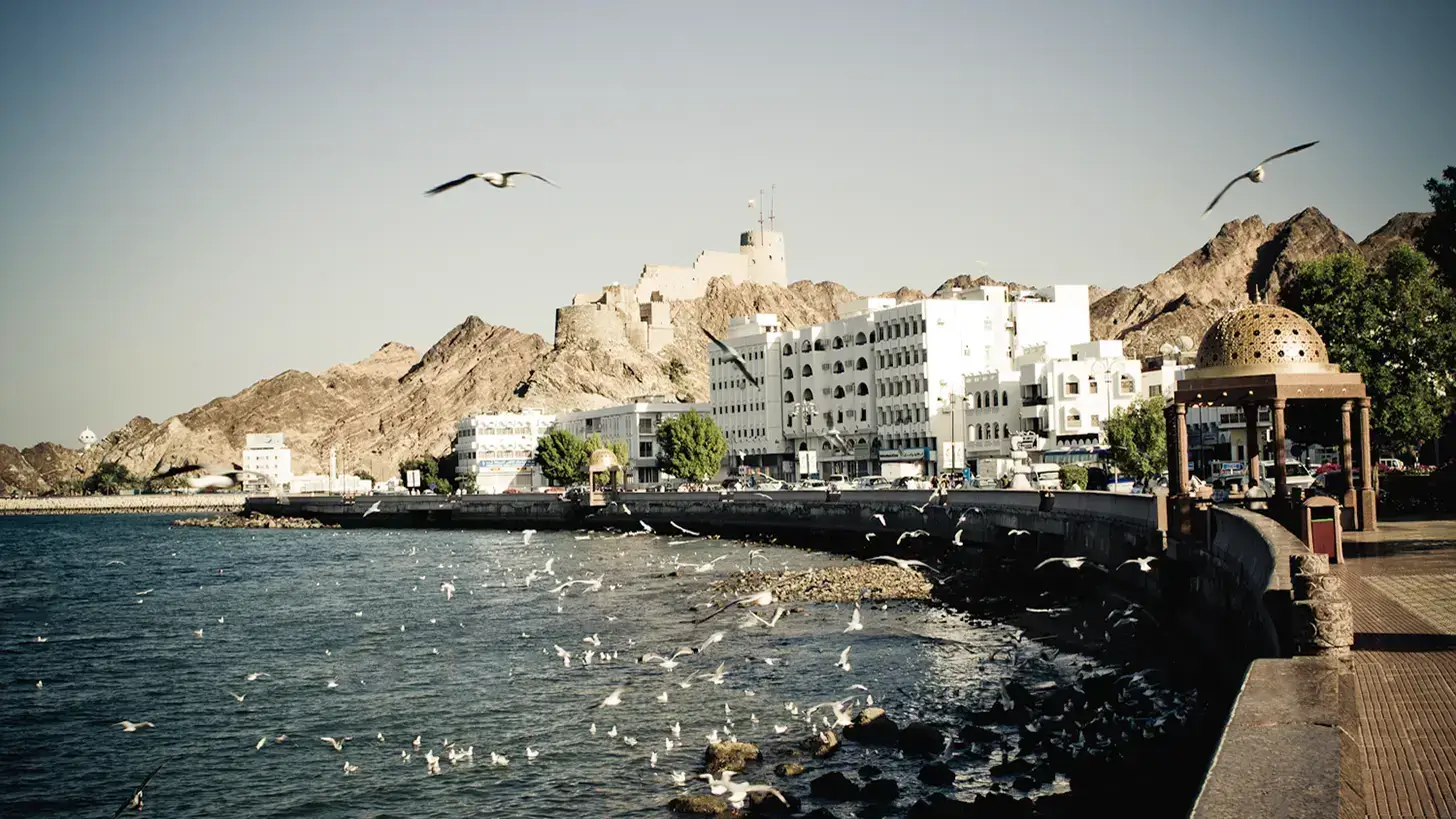
Muttrah Corniche is the three-kilometer waterfront promenade that ties the rest of Muttrah together, and it’s the easiest way to get a feel for the district in a single walk.
On one side is the harbour, often busy with dhows, fishing boats, and the occasional naval vessel or cruise ship; on the other are the rocky slopes of the Hajar Mountains and a row of restaurants, cafes, and old merchant buildings. Muttrah Fort anchors the eastern end of the promenade, while the fish market and a small marina sit toward the northern end. Walking the full stretch gives you a clear sense of how the harbour, the souq, and the fort all relate to each other physically, which is harder to piece together once you’re inside the narrow lanes of the souq itself.
The Corniche is comfortable to walk at almost any hour, but it’s noticeably more pleasant in the early morning or from late afternoon into the evening, when the heat has eased and the light flatters the harbour. It’s also flat and stroller-friendly, unlike the fort climb or the souq’s tighter lanes.
The main limitation is exposure. There’s limited shade along much of the route, so midday walks in the warmer months are best avoided.
Best for: an easy waterfront walk that works for any time of day outside peak summer heat.
Muttrah Fish Market

The Muttrah Fish Market is where to see the district’s working side up close, with fishermen, cutters, and buyers moving through a striking modern building before most tourists are even awake.
The current building, designed by the architecture firm Snøhetta, replaced the original 1960s market and was built to keep the same daily rhythm: a fresh catch sold each morning to individuals, restaurants, and market traders. The double-storey structure includes a rooftop cafe area, and its curved, perforated design was shaped to echo both traditional Omani architecture and the sweep of the corniche itself. It’s as much an architectural landmark now as a functioning market, which is part of why it draws visitors as well as locals doing their weekly shopping.
Because it’s a genuine working market, the most active period is early morning, when the day’s catch comes in. Visiting later in the day still gives you the building and the harbour views, but without the same buzz. It sits at the northern end of the Corniche, an easy add-on if you’re already walking that stretch.
The trade-off is straightforward: arrive too late and the market itself is quieter, leaving you with an interesting building but less of the working-port atmosphere that makes it worth the early start.
Best for: an early-morning stop that pairs naturally with a Corniche walk.
- Opening Hours: Everyday, 06:00 – 14:00
Muttrah Fort
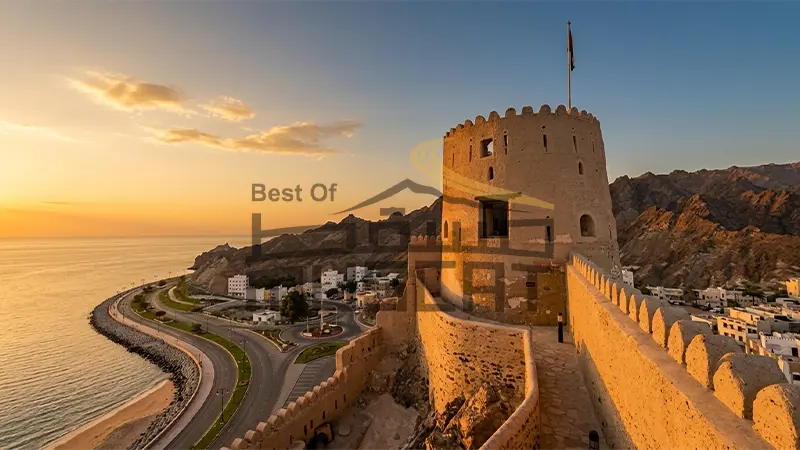
Muttrah Fort is the hilltop lookout that gives you the clearest view over Muttrah’s harbour, old town, and the mountains behind it, and it’s the single best vantage point in the district for photos.
Built by the Portuguese in the late 16th century and later rebuilt under Al Ya’arubah rule, the fort sits on rock outcrops at the eastern end of the Corniche, with three towers connected by inner courtyards and sloped defensive walls. From the top, you can look down over the souq’s rooftops, the harbour, and the curve of the coastline, which is what draws most visitors up in the first place rather than the fort’s interior displays.
Reaching it involves a walk uphill from the parking area near the Corniche, with steps for the final stretch, so it’s not the easiest stop for visitors with mobility concerns. According to Oman’s Ministry of Heritage and Tourism, conserving fortifications like this one and expanding public access to them is treated as part of the country’s broader tourism and heritage strategy, though on-the-ground access arrangements at individual sites can shift.
That last point matters here specifically: reported opening hours, entry fees, and whether the interior is open to visitors have varied across recent accounts, so it’s worth checking current visitor information before building your schedule around an interior visit. The exterior views and the climb itself remain worthwhile regardless.
Muttrah Fort is also one of the most popular sunset viewpoints in the city, and our roundup of the best sunset spots in Muscat places it alongside beach and hilltop options across town, with notes on timing and how it compares to spots like Shatti Al Qurum or Muscat View Point if you’re deciding where to catch golden hour.
Best for: photography and sunset views over the harbour.
- Opening Hours: Everyday, 08:00 – 23:00
Al Riyam Park and the Incense Burner Monument

Al Riyam Park is the green, shaded space where Muttrah’s most photographed monument sits, and it doubles as one of the more family-friendly stops in the district.
The park occupies a small headland with two hills, one topped by the remains of an old Portuguese watchtower and the other by the giant incense burner monument that has become one of Muscat’s most recognizable landmarks. Built to mark Oman’s 20th National Day, the oversized censer references the country’s long association with frankincense, and it’s lit at night, which makes it a popular stop for evening photos. Below it, the park itself has lawns, shaded seating, and a small children’s amusement area that tends to open in the evenings.
It sits at the eastern end of the Muttrah Corniche, close enough to the fort and the souq to fold into the same outing without extra transport. Reaching the monument itself involves a walk up a hillside path from the park below, which is manageable for most visitors but not stroller-friendly.
The main limitation is that close-up access to the monument is often restricted, so most visitors experience it from the park or the path below rather than right at its base.
Best for: families and evening photography.
- Opening Hours: Everyday, 08:00 – 23:30
Muttrah’s Old Merchant Quarter
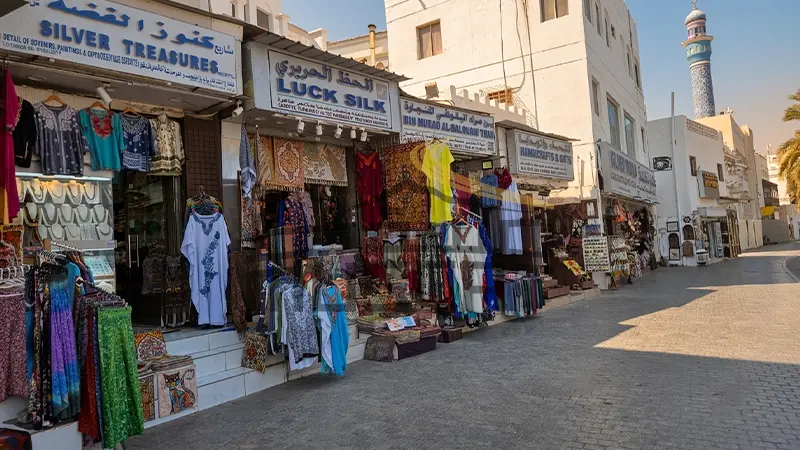
Beyond the souq’s main lanes, the backstreets of Muttrah’s old merchant quarter are where to see the district’s residential side, with weathered facades, old wooden doors, and balconies that have nothing to do with the tourist trail.
This isn’t a single attraction so much as a way of exploring, wandering the narrower streets that run inland from the harbour, between the souq and the base of the mountains. Many of the buildings here date to Muttrah’s era as a major trading hub, when merchant families lived above their storefronts, and the architecture still reflects that layered, practical style rather than anything built for show. It’s a useful contrast to the more curated experience of the main souq lanes.
This kind of unstructured walking works best in the cooler parts of the day, given the lack of shade in some stretches, and it rewards visitors willing to double back and explore rather than follow a fixed route. It connects naturally to the souq and the Corniche, so it doesn’t need to be a separate trip.
The limitation is that there’s no signage or curated route, so you’re relying on general orientation rather than a marked path, and some lanes double as service access for shops rather than pedestrian-first streets.
Best for: visitors who want a slower, less touristy look at Muttrah’s architecture.
Waterfront Seafood Dining on the Corniche
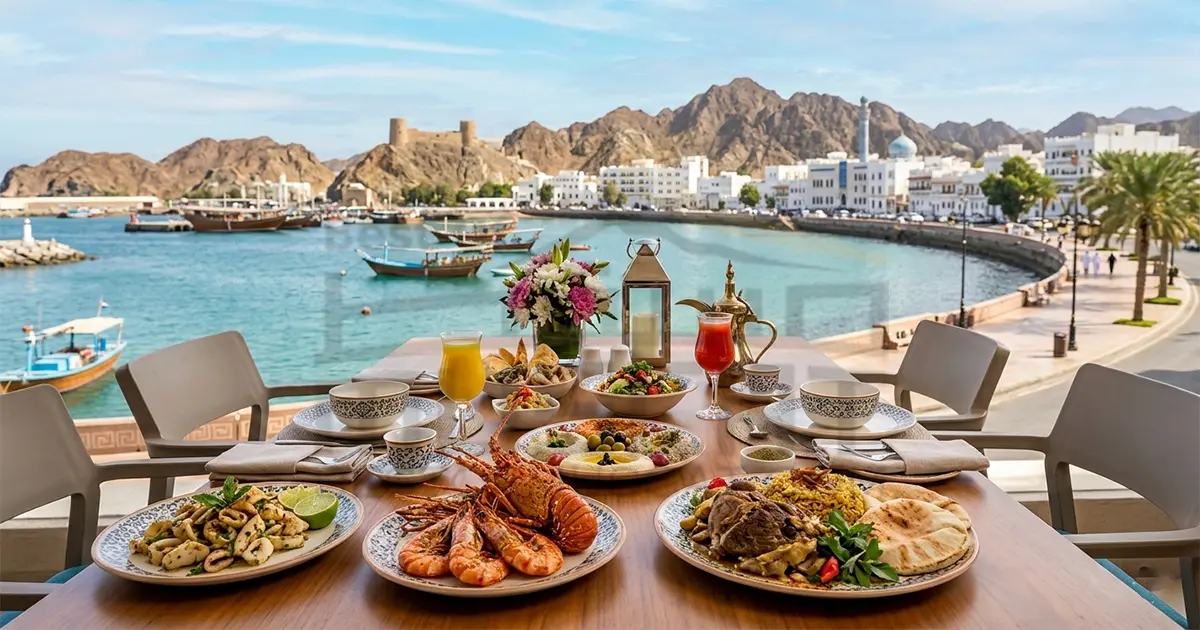
Eating at one of the sea-facing restaurants along Muttrah Corniche is the simplest way to end a day here, with fresh seafood, harbour views, and the evening crowd that gives the area its atmosphere.
Given Muttrah’s fishing industry and its proximity to the market, seafood is the obvious strength of the local dining scene, though the Corniche also has cafes and restaurants covering broader Omani and international menus. Sitting outside in the evening, once the heat has broken and the fort is often lit up in the distance, is arguably as much the experience as the food itself.
This is squarely an evening activity, since restaurants along this stretch get busiest as the sun goes down and temperatures drop. It pairs naturally with a pre-dinner Corniche walk or a stop at the fort for sunset before heading back down to eat.
The trade-off is that the most popular waterfront spots can fill up on weekend evenings, so arriving early or booking ahead is worth considering if you have a specific restaurant in mind.
For a closer look at where to actually sit down, our full guide to the best restaurants in Muttrah breaks down ten specific spots along the Corniche, from the fresh grilled catch at Aroos Al Bahar to the traditional Omani shuwa at Bait Al Luban, with pricing, hours, and exact locations for each one.
Best for: an evening close to a day spent exploring Muttrah.
Sunset Dhow Cruise from Muttrah Harbour

A sunset dhow cruise is the one way to see Muttrah from the water rather than the shore, sailing past the Corniche, the fort, and the wider Muscat coastline as the light changes.
These cruises run on traditional wooden dhows, the same style of vessel long used for trade around the Arabian Peninsula, now fitted out with cushioned seating for passengers. Routes typically depart from a marina outside the immediate district and sail along the coast, passing Muttrah’s harbour and Corniche along with other Muscat landmarks such as the forts guarding the old town and, further along, Al Bustan Palace. Most operators include light refreshments on board, and the appeal is almost entirely about timing: catching the same coastline at golden hour rather than under the midday sun.
Cruises generally run around two hours and need to be booked in advance, since they operate on a fixed schedule tied to sunset rather than showing up and boarding on the spot. Hotel pickup is commonly included, which makes it one of the lower-effort ways to see Muttrah if you’re short on time or don’t want to plan transport yourself.
The main limitation is that it’s a scheduled, paid activity rather than something you can do spontaneously, and calm sea conditions aren’t guaranteed on every date.
Best for: visitors who want a different vantage point and don’t mind pre-booking.
Local Insight: Planning Around Muscat’s Climate and Rhythm
Muttrah is at its best outdoors between October and April, when daytime temperatures sit in a comfortable range and evenings are cool enough for a jacket. From May through September, midday heat makes anything beyond a quick dash between air-conditioned stops uncomfortable, which shifts the sensible plan toward early morning and after-sunset visits.
Weekday mornings tend to be calmer at the souq and fish market than weekend afternoons, when local families and visitors overlap along the Corniche. Evenings follow their own rhythm: the promenade fills up gradually after sunset, restaurants get busier as the night goes on, and the Fort and Incense Burner Monument are both more atmospheric once lit.
Ramadan is worth planning around specifically. Shop hours in the souq shift, and some restaurants along the Corniche adjust their daytime service, though the area remains open to visitors throughout. If your trip lands during Ramadan, checking current hours before heading out saves a wasted trip to a shuttered stall or restaurant.
How to Spend Your Time in Muttrah
If you have 1-2 hours: Walk a stretch of the Corniche and spend the rest of your time in Muttrah Souq. This covers the two most central experiences without requiring a climb or a car.
If you have half a day: Add the fish market in the morning, then the souq, then Muttrah Fort in the afternoon, finishing with an early evening walk back along the Corniche.
If you want history and culture: Prioritize Muttrah Fort, and a walk through the old merchant quarter. These three together give the clearest sense of how the district developed.
If you want photography and views: Muttrah Fort and the Riyam Incense Burner Monument are the two standouts, ideally timed for late afternoon into sunset.
If you’re visiting in the evening: Combine the Corniche walk, the illuminated fort and monument, and a seafood dinner by the water. A sunset dhow cruise is worth booking ahead if you want the same views from the sea.
If you’re spending more than a single afternoon here, staying inside the neighborhood itself makes a real difference. Our guide to the best hotels near Muttrah rounds up properties right along the Corniche and Souq, several with harbor views and rates well below what similar locations cost in Qurum or Shatti Al Qurum, so you can be back on the promenade for an evening walk without factoring in a taxi ride.
Frequently Asked Questions (FAQ)
What is Muttrah best known for?
Muttrah is best known for its historic souq, its working harbour and fish market, and the Corniche that connects them, along with the hilltop fort and incense burner monument that define its skyline.
What are the best things to do in Muttrah?
The core experiences are Muttrah Souq, the Corniche walk, the fish market, Muttrah Fort, Al Riyam Park with its incense burner monument, with waterfront dining and a sunset dhow cruise as good add-ons.
How long do you need in Muttrah?
A focused visit to the souq and Corniche takes an hour or two. Half a day lets you comfortably add a museum, the fish market, and a viewpoint without rushing.
Is Muttrah worth visiting?
Yes. It’s one of the few parts of Muscat where the working harbour, a centuries-old market, and clear historic architecture are all still active in daily use rather than preserved as a static display.
What is the best time to visit Muttrah?
October through April offers the most comfortable outdoor conditions. Within any season, early morning suits the fish market and souq, while late afternoon into evening suits the Corniche, the fort, and dinner.
Is Muttrah suitable for families?
Yes, particularly the Corniche and Al Riyam Park, which have open space and shaded areas. The souq’s narrow lanes and the fort’s stairs are more manageable for older children than very young kids or strollers.
Can Muttrah be explored without a car?
Yes. Muttrah is compact and walkable once you’re there, and Mwasalat city bus routes, including services connecting Ruwi Bus Station to Muttrah, reach the district from other parts of Muscat.
What can you combine with a visit to Muttrah?
Muttrah pairs naturally with a wider Old Muscat visit, since the two historic districts sit close together along the coast, or with a sunset dhow cruise that extends the same coastline out onto the water.
Which Muttrah experience is best for first-time visitors?
Muttrah Souq combined with a Corniche walk gives first-time visitors the clearest introduction, covering shopping, harbour views, and the district’s general layout in one outing.
What should visitors know before visiting?
Expect a split daily schedule at the souq and some sites, with a midday lull and a busier evening period. Outdoor stretches have limited shade, so sun protection matters even outside summer, and it’s worth confirming current hours for the fort and museum before planning your day around them.